

Any visit to Surabaya would be incomplete without spending 1- 2 hours at the Sepuluh Nopember (10th November) museum.
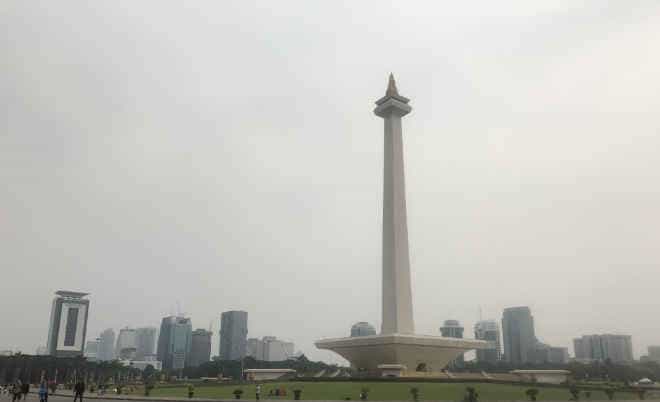
Situated a short distance behind, and below, the Tugu Pahlawan (Heroes Monument) the immediately visible museum exterior is very reminiscent of the Louvre architecture; consisting of 3 pyramid structures.
Immediately in front of this exterior is a small monument, featuring 3 fighters, dedicated to the grave of the unknown hero. I believe - with my somewhat sketchy grasp of Bahasa Indonesia - that this is the actual tomb of a fighter from Surabaya who gave their life in defence of the city.
The 10th November 1945

The Battle for Surabaya, an important event in the Indonesian struggle for Independence, saw the Indonesian military and militias fighting against predominantly British allied forces in a conflict which cost the lives of between 6,300 - 15,000 Indonesians with an additional 200,000 Indonesians fleeing Surabaya as allied forces bombed the city.
The 10th November 1945 saw the peak of the conflict and this date is commemorated annually with battle re-enactments and events retelling that history.
To understand why the allied forces attacked Surabaya only to be met by the (understandably) intense resistance from Indonesian forces and militias composed of young men from all over Java (and possibly neighbouring islands within the Indonesian archipelago) please read this wikipedia entry.
It’s hard to believe though, whilst stood there in the present time, that over half the city was destroyed and thousands of lives lost during this battle. Seeing how tranquil, vibrant and prosperous Surabaya is in modern times makes for a stark contrast to the history of the city as depicted within the 10th November museum.
The museum

Divided over 2 floors the museum hosts a range of exhibits informing the visitor of the political and military events preceding the 10th November 1945 as well as key aspects of the battle itself; including notable fighters and patriots such as Bung Tomo and Mohamad Mangoendiprodjo, important locations including Simpang Hospital and the Hotel Orantje (now the Majapahit Hotel) as well as weapons, memorabilia and photographs documenting the event and its aftermath.

Seeing the weapons used in the battle was a throwback to my childhood (that was spent busily digesting various issues of The Elite and learning about the weaponry used by armed forces during WW2 and in subsequent conflicts around the world).
Anti-tank rifles, Madsen light machine guns, Bren guns, Sten guns, “Mills Bomb” grenades, colt pistols and many other types of sub-machine guns and hand guns along with their ammunition were all on display.


Although decommissioned it’s kind of crazy to think how those weapons were used to end human lives during that battle and how, in the close to 75 years since then, the military forces of today’s world have even more advanced, lethal weaponry at their disposal.
In addition to the weaponry, documentation and memorabilia on display there were also dioramas and interactive video displays that helped tell the historical narrative of the Battle for Surabaya.

In the grounds immediately outside the museum are examples of weaponry and vehicles captured from Allied Forces including tanks and cannons.


Location
Situated at Jalan Pahlawan, 60174, Surabaya, East Java the 10th November Museum is accessible by all forms of public transport or by foot.
Fee
Entry to the museum costs, at the time of writing, 5,000 IDR (equivalent to £0.27 GBP or $0.35 USD).




Post a comment
All comments are welcome and the rules are simple - be nice and do NOT engage in trolling, spamming, abusiveness or illegal behaviour. If you fail to observe these rules you will be permanently banned from being able to comment.