

Fort Vredeburg museum, formerly a Dutch colonial fortress, houses collections of historical photographs, artefacts and replicas that help tell the story of Yogyakarta’s role in Indonesia’s journey to independence.
Situated on Jalan Ahmad Yani, near to Serangan Umum monument and across the road from the presidential palace, Gedung Agung, Fort Vredeburg is situated, more or less, in the heart of the city of the centre and therefore quite accessible by all forms of public transport and by foot.
Simply enter the car park area on Jalan Ahmad Yani and continue walking in a straight line - you’ll see that Fort Vredeburg museum is directly ahead.

The museum courtyard features a large statue of the Yogyakartan prince Diponegoro seated on a rearing horse.
Diponegoro fought against the Dutch control of Java during the Java War (1825 - 1830) prior to his capture and exile to Makassar, South Sulawesi where he died in 1855.
As a result of his fight against Dutch colonial occupation Diponegoro is considered a national hero in Indonesia.

Situated nearby are life size sculptures lining the path from the courtyard, amongst others, of Japanese, Dutch, British colonial soldiers and Indonesian fighters.


Further down the path leading from the courtyard are 2 bronze sculptures of General Soemhardjo, the first chief of staff of the Indonesian National Armed Forces and General Sudirman, the first commander of the Indonesian National Armed Forces:


There are a number of exhibition buildings within the museum grounds which feature dioramas depicting significant historical events that occurred during the region’s fight for independence.


These reminded me of the many dioramas that I had seen when visiting Lubang Buaya on the outskirts of Jakarta city.
There’s also a small exhibition area featuring information about Indonesian currency and displaying examples of notes and coins that were issued during the country’s struggle for independence.
Seeing these historical artefacts (am I the only one who finds it odd to view old currency as a historical artefact - even though it obviously is?) was quite fascinating, particularly for the design, iconography and typography used within the notes.


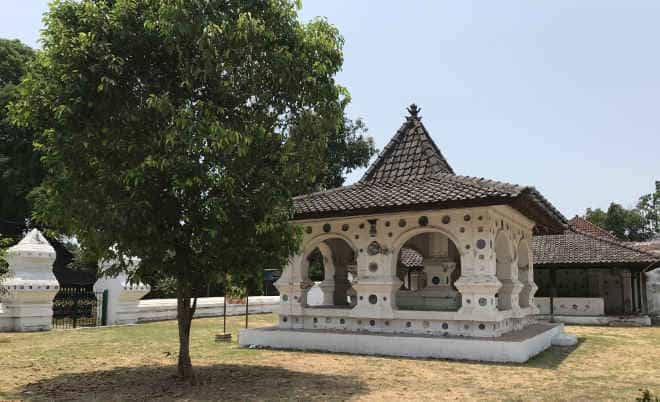
The museum grounds are quite interesting, even if a little confusing at times as to where exhibition spaces are actually located, as many of the architectural features of the former colonial fortress are still evident:


Added to this aesthetic is just how spacious the grounds of the museum are and the opportunities for photography that are presented by being there, particularly the view from the walls of the former fortress.


Oh, and finding a children’s playground area was the last feature I ever expected to encounter!

Unfortunately the layout of these buildings, confusing signage (it was difficult to know where all of the exhibits were located within the grounds of the museum) and poor management of some of the exhibits (I.e. lack of detailed information or poor grouping) makes for a less than fluid viewing experience. This is a shame as the story of Yogyakarta’s role in the struggle for Indonesian independence is quite detailed and interesting and the opportunities for the museum to relate this with a more enhanced visitor experience are sadly not being capitalised on.
I would love to see a more structured exhibition layout representing that history; from the Java War through to the Indonesian National revolution and beyond, with detailed exhibits on some of the key historical figures such as Diponegoro and their role in the country’s fight for independence. It would be fantastic to be able to be guided through that history by each era and the significant events that played out during that time.
I’m not trying to deter any visitors from exploring the museum grounds (which are quite beautiful and provide some great opportunities for photography) nor the exhibitions contained within (which are interesting although, in my humble opinion, not presented to their best potential) I’m just relating my perceptions of what I have encountered on a regular basis with many museums in Indonesia.
There seems to be a lack of developing museum spaces and their exhibitions to their fullest potential which saddens me as the history of this country is incredibly rich and provides so many opportunities to present that through better structured exhibitions, greater focus on key historical figures and greater variety of media (I.e. photos, sculptures, interactive kiosks, films etc) - all of which could be combined in a more fluid, accessible visitor experience.
Please don’t think I’m writing this place off though as I did enjoy my visit here (regardless of the previous few paragraphs) and would recommend the location for any visitor itinerary.
For local or foreign visitors alike there’s definitely some interesting exhibits contained within here and you might find yourself spending anywhere between 1 - 3 hours visiting this museum and soaking up what it has to offer.
Do bring plenty of water and sunscreen for when you’re walking around outside though - the temperature is ridiculously hot and you’ll soon know about it….especially if you’re unprepared!
Fee
Foreign visitors pay 15,000 Indonesian rupiah (roughly £0.83 BGP or $1.07 USD depending on the daily exchange rate) which differs from the ticket price that Indonesian visitors would pay. This is nothing unusual for most visitor attractions in Indonesia if you're a foreigner but it’s not an issue where the exchange rate works in your favour as the cost of entry is still incredibly cheap.




Post a comment
All comments are welcome and the rules are simple - be nice and do NOT engage in trolling, spamming, abusiveness or illegal behaviour. If you fail to observe these rules you will be permanently banned from being able to comment.